





Protect Your Trees While You Anchor Your Zip Line
What Makes This Tree Saver Kit Different?
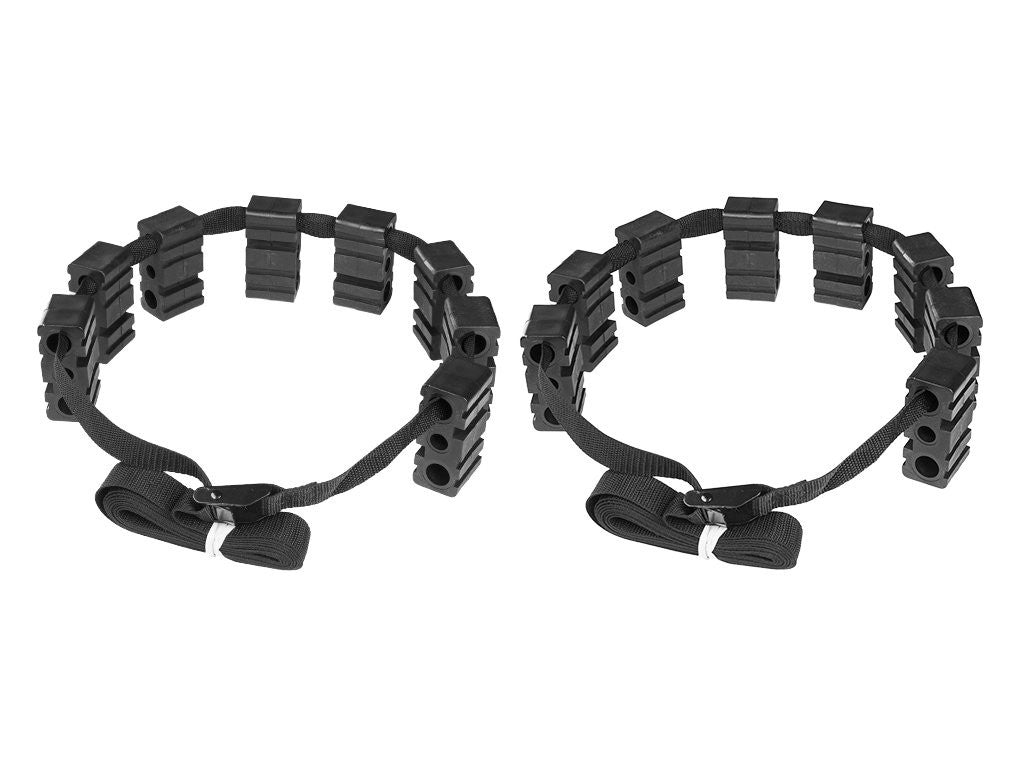
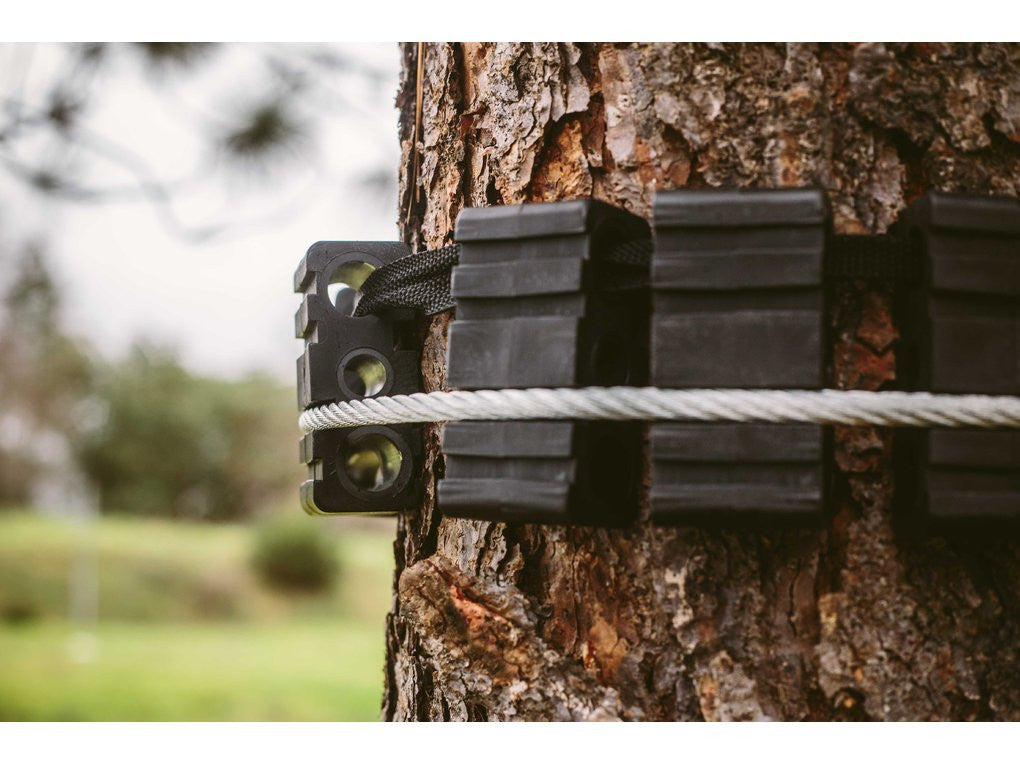
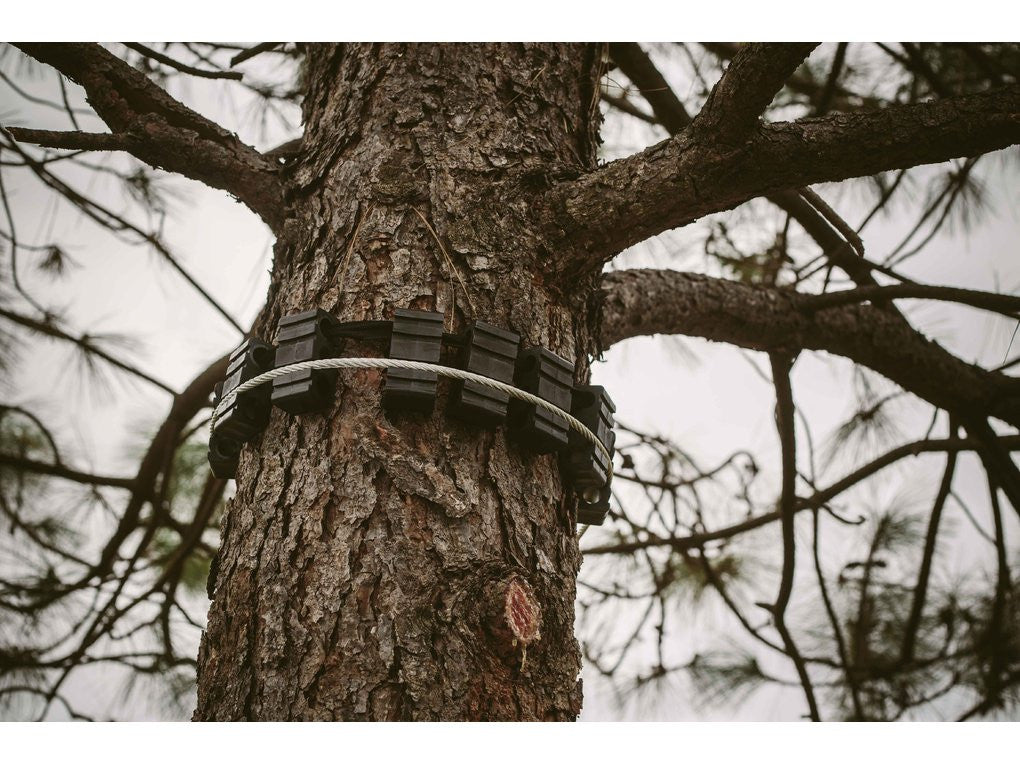
Your zip line cable is strong enough to cut straight through bark and choke off the cambium layer, the living tissue that keeps a tree growing. The Tree Saver Block Kit gives the cable something else to grip: a buffer of heavy-duty nylon blocks that wraps around the trunk, so you can tension your line without bearing down on the tree itself.
What's Included in the Box?
16 heavy-duty nylon blocks (8 per tree) to space cable away from the bark
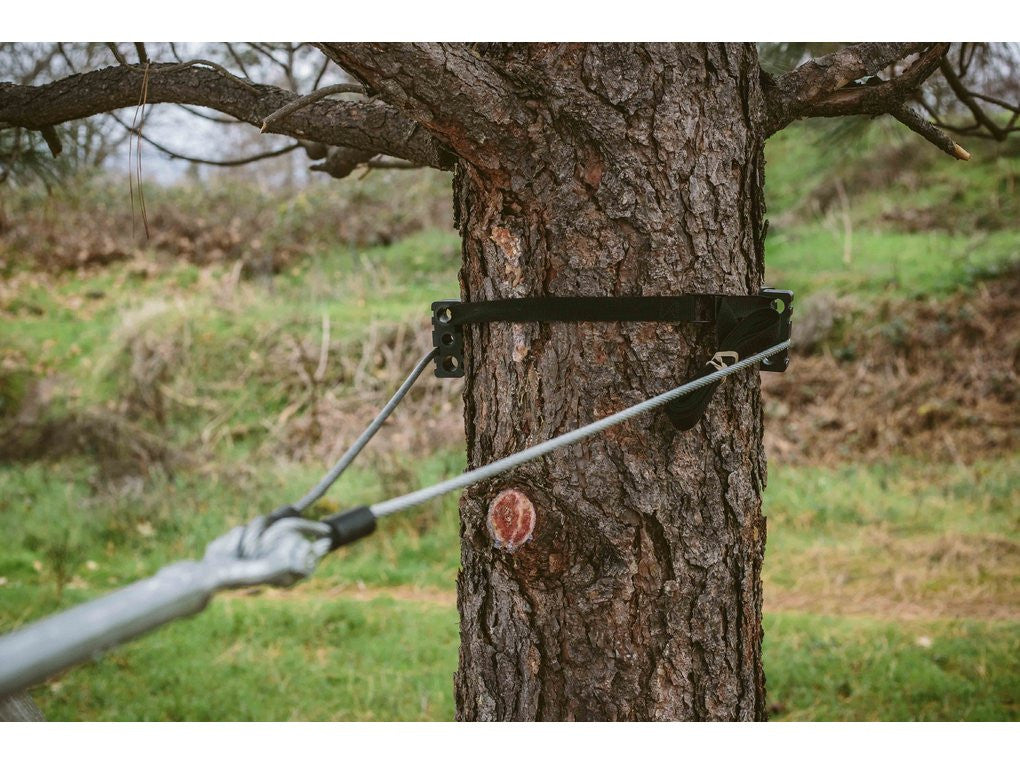
Two adjustable straps, 11.5 feet long, to hold blocks in place around trees up to 3 feet in diameter
Blocks resistant to sun, rain, and cable wear for long-term outdoor use
Why Choose the Tree Saver Block Kit?
Choose the "Blocks for One Tree" option when anchoring to a post on one end and a tree on the other
Blocks can also be used on larger-diameter trees with your own strapping instead of the included straps
Designed & Assembled in Oregon, USA
Note: We don't guarantee this kit will prevent harm to your tree. Every tree's health is different, and a weak or vulnerable tree can be affected quickly by any change in pressure to the trunk. Space blocks as far apart as you can around the trunk to help maintain circulation.
Is This the Right Tree Saver Kit for You?
If you're anchoring to living trees instead of posts, this is the buffer standing between your zip line and the tree's bark, and a small trade-off for a tree you'd rather keep around for the next ride.
Not only do you get the Tree Savers, you also get the very best customer service in all the land for all your questions and concerns. Call us at (888) 476 3701.

If you're not happy, send it back for a full refund within one year.

Installation Guide
FREE Design consultation
Want to talk with a specialist about your project?
Schedule a free 25 minute consult to help you plan your zip line project.
Zip Line University
Explore Our Knowledge Base
Installing a planning a zipline can seem like a daunting project. We're here to demystify the process!
FAQ
How do I measure elevation change in my backyard?
Please refer to the manual that comes with your kit for specific installation instructions.
Stand at the end tree and hold a 4 FT Carpenter’s Level like a rifle. Holding one end up to your eye, point the opposite end at the base of the starting tree, right where the dirt and tree meet. Make sure the bubble is between the two hashes indicating level (crouch down if your yard has a minimal slope or climb a ladder if your yard has lots of slope).
Once you have the level aiming at the base of the starting tree, measure from the Carpenter’s Level down to the ground. This measurement is your natural elevation change.
If you have questions, please do not hesitate to give us a call at 888-476-3701
How do I figure out the slope for my zip line?
Please refer to the manual that comes with your kit for specific installation instructions.
The slope determines the speed of the zip line. Essentially this is the angle you set the cable at between the two trees. The slope is calculated by multiplying the distance between your trees times .03 or 3%.
More details on Slope can be found in the Zip Line Gear handbook included with your purchase. You can also view a digital version of the “Cable Slope & Sag” right here. We recommend finding a landscape with a natural slope of 3% to 6%, This is a 3’ - 6’ foot drop per 100’ feet.
For zip lines that will NOT utilize a Bungee Brake System, (a Stop Block is NOT a braking system) the maximum allowable slope is 3%. For zip line setups that include a Bungee Brake, the maximum allowable slope is 6%.
!!WARNING!! Zip line must never exceed 6% (6’ foot drop per 100’ feet) riding slope. High speed collision with end point may cause injury or death.
I don't have trees. Can I use posts?
Yes you can, but you need to carefully read the instructions for how to select, and install posts in the Backyard Zip Lines handbook included with your purchase. Alternatively, you can review the information in the digital version of our handbook right here.
If you are in any doubt as to how to properly select and install a wood post, please do not hesitate to contact us at 888-476-3701.
Recommended for You
- Choosing a selection results in a full page refresh.